
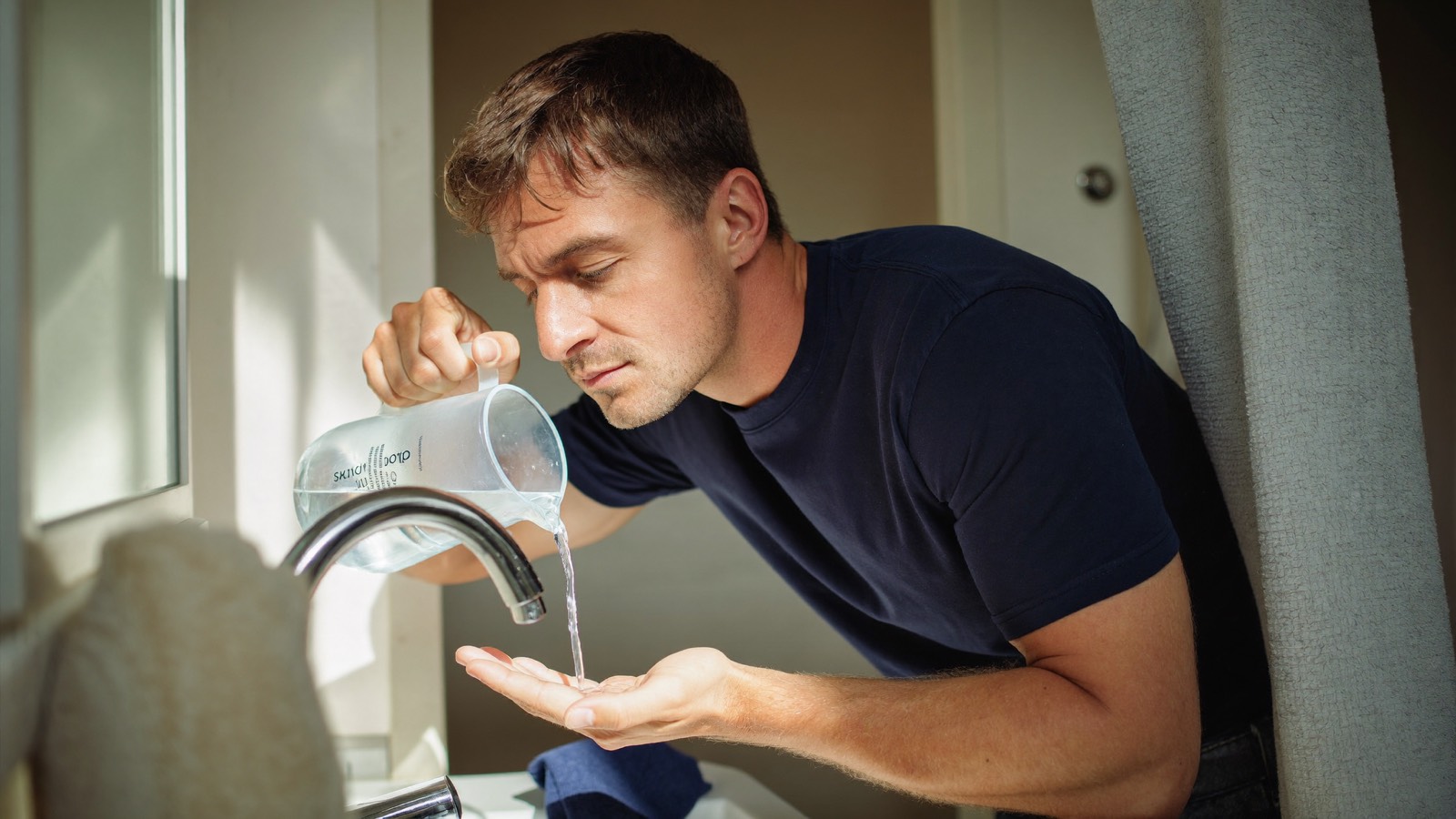
Washing hair after a transplant is simple once you see it as a short sequence: set things up, wet the area gently, apply foam without rubbing, rinse, and let it dry on its own. For roughly the first week, that sequence is all you need. In the second week a light massage is added to loosen crusts, and by about day 14 most people are back to a regular shower. Our hair transplant recovery page covers the wider healing timeline; this guide walks through the wash itself, one step at a time.
Your clinic's written instructions take priority over any general guide, because they reflect your procedure and your scalp. What follows is the routine most patients at our Freehold clinic use, laid out so you can follow it at your own sink.
In short: have a cup, the kit shampoo and a soft towel ready; pour lukewarm water, foam the shampoo in your hands, press it on, wait a minute, rinse with the cup and air dry the top. Add gentle fingertip circles from about day 7. Return to a normal shower around day 14.
What to Have Ready
Getting set up before you start keeps the wash calm and quick.
| Item | Why you need it |
| A clean cup or small jug | Controls the flow so water runs off instead of spraying |
| The shampoo from your aftercare kit | Mild and approved for a healing scalp |
| A soft, clean towel | For patting the back and sides only |
| Paper towels | For lightly blotting drips near the grafts |
| Saline spray, if supplied | Keeps the area moist between washes |
| A button-up shirt | Nothing to pull over your head afterwards |
The Eight Steps of a Week-One Wash
- Wash your hands. Clean hands reduce the chance of irritation on healing skin.
- Check the water. Run it until it feels lukewarm on your wrist, close to body temperature.
- Lean forward. Stand over the sink or tub with your head tilted slightly down so water runs away from your face.
- Wet the area. Pour water slowly from the cup over the treated area, a little at a time.
- Make foam in your palms. Rub a small amount of shampoo between your hands until it is light and airy.
- Press, do not rub. Lay the foam on the grafts with flat fingers, pressing gently straight down, then leave it for one to two minutes.
- Rinse with the cup. Pour slowly until the foam is gone; repeat once if the area still feels soapy.
- Dry without touching. Let the top air dry; pat the back and sides with the towel.
Most people wash once or twice a day in the first week, as instructed. The whole routine takes about five minutes.
How the Routine Changes in Week Two
By about day 7, the grafts are much more secure, so the routine adds one thing: a light massage. After applying the foam, use the pads of your fingers to make slow, small circles over the treated area for about a minute. This softens and lifts the crusts, which usually come away over the next few days, often with a short hair attached. That hair is the cut shaft above the skin; the follicle stays in place. You can also start letting the shower run over your head at low pressure from around this point if the clinic agrees.
The Donor Area Is Different
The back and sides, where grafts were taken from, heal faster and tolerate more. From the first days you can usually wash the donor area with shampoo and fingertips as you normally would, just more gently, and pat it dry with a towel. It may feel tight or tender for a few days. If any spot stays red, weeps or becomes more painful, let the clinic know.
Itching, Dryness and Flaking Between Washes
Itching usually starts a few days after surgery and can last a week or two. It is a sign of healing, not a problem, but it is the moment many people are tempted to scratch. A few things help: a saline spray from your kit, a cool compress held near (not on) the grafts, keeping the bedroom cool and wearing soft fabrics around the neck. Some flaking as crusts lift is normal too. If itching is intense, comes with a rash or spreads well beyond the treated area, call the clinic, which may suggest a soothing option.
Washing on Workdays
If you are back at a desk within a few days, the wash fits easily around work. A morning wash before you leave and an evening wash after you get home is a common rhythm. Air drying takes a little longer than a towel, so allow fifteen to twenty minutes before you head out, especially on cold New Jersey mornings, and avoid pulling a tight hood or hat over damp grafts. A loose, clean cap is fine only once the clinic allows it.
When You Can Shower Normally
Most people return to a normal shower at about day 10 to 14, once the crusts have gone and the clinic has seen the scalp. Keep the water warm rather than hot and the pressure moderate for a little longer, and shampoo with your fingertips rather than your nails. By the third week, washing usually needs no special thought at all.
Mistakes to Avoid
- Waiting to wash: skipping the wash lets crusts thicken and itch.
- Using the shower head too early: the spray pushes on grafts before they are anchored.
- Hot water: adds redness and swelling.
- Pouring shampoo onto the scalp: undiluted shampoo needs rubbing to spread.
- Towel drying the top: friction can disturb fresh grafts.
- Picking at crusts: they lift on their own when softened.
- Adding products early: gels, sprays and dry shampoo wait until you are cleared.
If You Are Commuting or Traveling
If you need to travel in the first week, the wash travels well. Pack a cup, your shampoo and a small towel, and use the same steps at a hotel or a relative's sink. Hotel and gym shower heads can be strong, so keep them aimed away from your head until the second week. Our guide to travel after a hair transplant covers driving, trains and flights in the first days.
Washing and Graft Safety
Gentle washing does not dislodge grafts; rubbing, scratching and strong water pressure are what to avoid. If you notice a small spot of fresh bleeding after a wash, press a clean gauze on it lightly and mention it to the clinic. A dry crust coming away is part of normal healing. Our article on whether you can knock out a graft explains the difference in more detail.
What Comes Next
Once washing is back to normal, the next milestone is shedding, which usually starts in weeks two to six and is expected. New growth follows from around month three or four, as our hair growth timeline month by month explains. At our Freehold clinic, Dr. Val Prokurat, MD reviews every plan, and every patient leaves with written washing instructions and a direct number for questions.
Leave Surgery Day Knowing Exactly What to Do
Book a free consultation at our Freehold clinic. We show you the wash step by step, send you home with written instructions and the right shampoo, and give you a number to call with any question in the first two weeks. Call (201) 350-1777.