
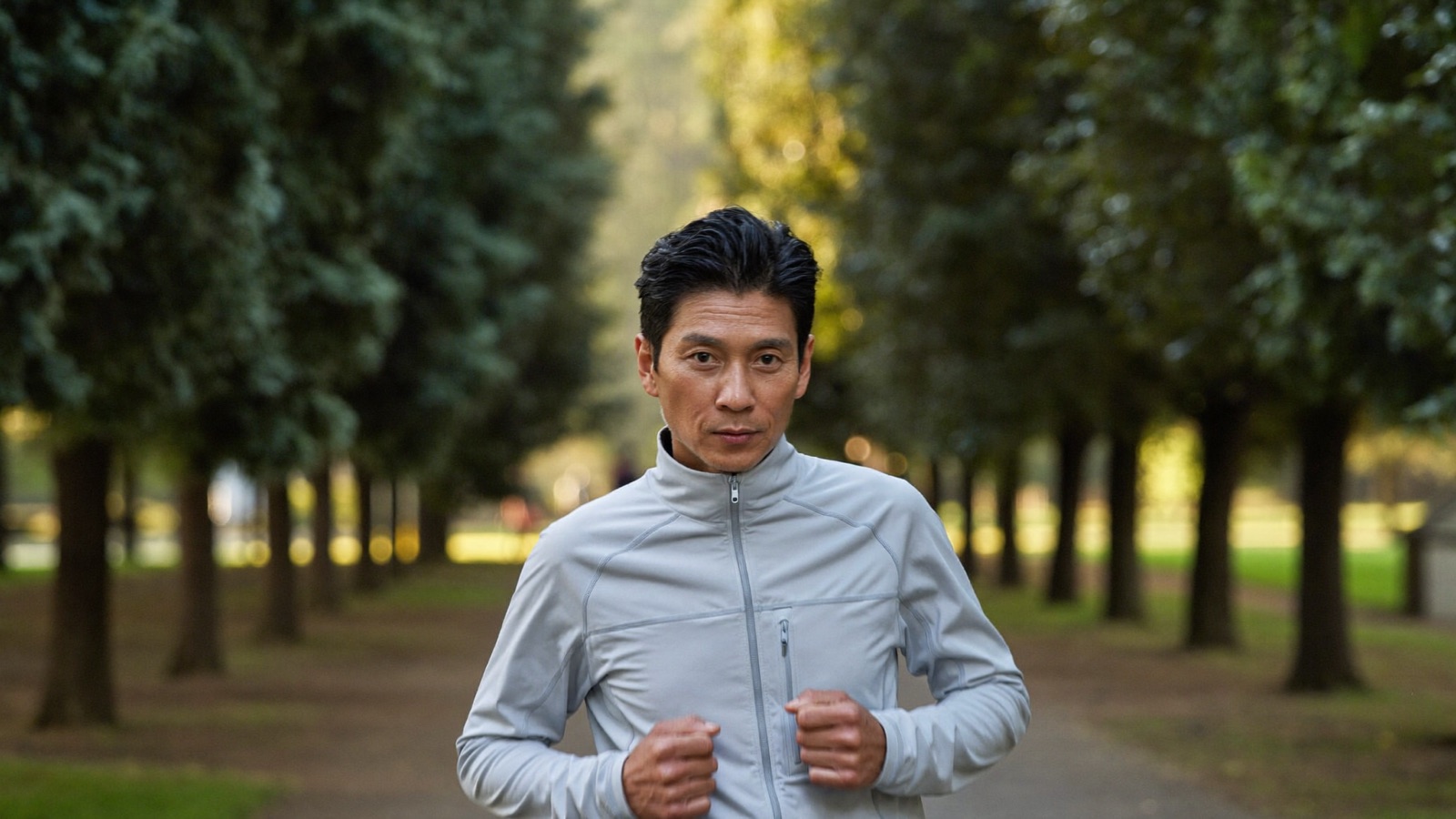
Exercise after a hair transplant is one of the first things active patients ask about, usually right after "will it hurt?" If you run, lift, cycle or play a weekly game, the idea of two weeks on the couch can feel worse than the procedure itself. The good news is that you do not have to stop moving. You just have to move in the right order. Our hair transplant recovery guide sets out the clinic's full aftercare plan, including the 14 days we ask you to stay out of the gym. This post zooms in on training: why sweat and strain matter, what a sensible return looks like week by week, and how to ease back into cardio, weights, yoga, sports and the pool without putting new grafts at risk.
One note on scope. If your main question is when you can face the office or a customer again, our guide on going back to work after surgery handles that by job type. Here, the focus is the gym, the trail and the court.
Why Your Workout Has to Wait
For the first several days, each graft sits in a tiny opening in the scalp, held in place by a snug fit and a small clot. Over roughly the next week and a half, new tissue grows around it and locks it in. Until that happens, three things that come with almost any workout can cause trouble.
Raised blood pressure
Hard effort pushes your heart rate and blood pressure up, and that extra pressure reaches the scalp. In the early days it can restart light bleeding at the recipient sites or add to swelling across the forehead. Heavy lifting is the biggest offender, because many people hold their breath and bear down at the hardest point of a rep, which spikes pressure in the head.
Sweat
Sweat is salty, it carries bacteria from the skin and it softens crusts before they are ready to come away. On a fresh scalp, a heavy sweat followed by a rub with a towel is a recipe for irritation and, at worst, a dislodged graft. Sweat also tempts you to touch your head, wipe your brow or push your hair back, all habits you want to drop for a while.
Friction and impact
Anything that rubs, bumps or presses on the treated area matters: a helmet strap, a headband, a ball to the head, a mat under your scalp during a floor stretch, or a training partner's elbow. Our team asks patients to keep fitted caps, headbands and bike or motorcycle helmets off the head for three weeks for exactly this reason.
None of this means exercise is bad for a hair transplant. Once the scalp has healed, regular activity is good for circulation, sleep and stress, all of which help you feel good while the new hair grows in. The point is timing.
A Week-by-Week Plan for Getting Back to Training
Everyone heals at a slightly different pace, and your own care sheet always wins over a general guide. Still, most patients follow a pattern close to the one below, with each stage adding a little more effort once the last one feels easy. Our broader timing guide for hats, workouts and swimming sets activities side by side with hats, travel and other everyday questions; this table goes deeper on training alone.
| Time since surgery | Usually fine | Still on hold |
| Days 1 to 3 | Rest, short slow walks around the house or block | Any workout, bending over, lifting anything heavy |
| Days 4 to 7 | Relaxed outdoor walks in the shade, gentle mobility while standing | Sweating, running, weights, hot rooms |
| Days 8 to 14 | Longer walks, easy stationary cycling or elliptical if you stay cool and dry | Lifting, hard cardio, classes, contact of any kind |
| Weeks 3 to 4 | Gym, running and lighter weights, building up over a week or two | Helmets until three weeks pass, inversions, contact sports, swimming |
| After 1 month | Swimming, most sports and full training, if your scalp has healed well | Anything your care team has asked you to delay for your case |
Notice that the gym only returns after the second week, which matches the 14 days in our recovery instructions. Treat each date as the earliest a stage usually opens, not a target to hit. If an easy session leaves your scalp throbbing, sore or red, drop back a stage for a few days.
Walking: Your Exercise for the First Two Weeks
Walking is the one activity almost every patient can start early. A slow loop of the block on day two or three helps circulation, eases stiffness from the long procedure day and gets you out of the house. Keep it short at first and make it longer as the days pass.
A few habits make early walks safer. Go at a pace where you could hold a conversation without puffing. Pick cooler parts of the day, such as early morning or evening, so you are not sweating. Stay in the shade where you can, since the scalp should not spend long stretches in strong sun during the first month. In Monmouth County that might mean a park trail under trees rather than an open stretch of boardwalk at noon.
From around the second week, if your scalp feels comfortable, you can stretch walks out to 45 minutes or an hour and add some gentle hills. If you have a dog that pulls hard on the lead, ask someone else to walk it for now: a sudden lunge can jolt your neck and tempt you to brace or bend awkwardly.
Cardio: Treadmill, Bike and Running Outdoors
Steady cardio is usually the first "real" training to return. Low-impact machines come before running, because they let you control your effort and keep the head still.
Stationary bike and elliptical. Toward the end of the second week, many patients can try 15 to 20 minutes at an easy pace in a cool room, as long as they finish without sweating heavily. Point a fan at your body rather than your head and keep a clean, soft towel nearby for your face and neck only.
Running. Jogging bounces the body and raises your heart rate quickly, so it waits until the two-week mark has passed. Start with shorter, slower runs than usual, ideally on flat ground. If you normally race or do intervals, save hard efforts until you have a few easy weeks behind you. Skip a cap or sweatband for the full three weeks; if you need shade, run early or late in the day.
Outdoor cycling. Riding on the road or trail needs a helmet, and helmets stay off for three weeks. That makes indoor cycling the better bet until then. When the helmet does go back on, loosen the straps and padding a little and put it on and take it off slowly.
Strength Training: Lifting Without the Strain
Weight training is where patients are most tempted to rush, and where the risks are most real. Our recovery plan asks for 14 days with no heavy lifting, and for many people it makes sense to wait a little longer before returning to their usual loads.
When you do go back, think of the first two weeks as a reintroduction. Start at roughly half your normal weight and stop well short of failure. Breathe out through the effort of each rep rather than holding your breath. Machines and cables are easier to control than free weights, which helps you stay steady as you rebuild.
Some exercises deserve extra care for longer:
- Head-down positions such as bent-over rows, deep forward folds and stiff-leg deadlifts send blood to the head. Swap them for seated or chest-supported versions at first.
- Lying on a bench for presses or flyes puts the back of the head on the pad. That is usually fine for an FUE donor area once the first week has passed, but put a clean towel down and do not press your head into the bench.
- Overhead pressing and pull-ups can involve a grimace and a breath hold. Keep the weight light and the reps smooth.
- Max lifts and competitions are the last thing to return. Give yourself several weeks of normal training before testing a one-rep max.
Gym hygiene matters too. Wipe down benches before use, carry your own clean towel and keep your hands away from your head between sets, especially after touching shared equipment.
Yoga, Pilates and Anything Upside Down
Gentle stretching on your feet is often fine within the first week or two. The trouble comes from poses that tip the head below the heart or place it on the floor. Downward dog, forward folds, plow, shoulder stands and headstands all push blood to the scalp, and some press the treated area against a mat. These typically wait three to four weeks.
Hot yoga and heated studios are a separate issue. They are designed to make you sweat, so treat them like a sauna and hold off for at least a month. When you return to a regular class, tell the instructor you are recovering from a scalp procedure and take the modified version of any inverted pose until your care team says otherwise.
Pilates mat work often has you lying on your back with the head down. If your donor area is still tender, a folded towel under the head spreads the pressure. Reformer sessions are usually easier to adapt than floor routines, but the same no-inversion rule applies.
Team Sports, Racquet Sports and Contact
Sports add two risks on top of sweat: impact to the head and equipment that sits on it. The safest way to plan is to group them by how likely a knock is.
Low contact: golf, bowling and casual doubles tennis or pickleball carry little risk of a blow to the head. They usually come back after the two-week mark, provided you play in the cooler part of the day and avoid long hours in full sun. A loose, breathable hat is often allowed in the second week, but nothing with a tight band.
Moderate contact: basketball, soccer and volleyball involve jumping, heading the ball or getting caught by an elbow. These are better left until about four weeks, and heading a soccer ball should wait longer still.
High contact and helmets: martial arts, wrestling, football, hockey and lacrosse combine headgear with direct hits. Plan on at least a month, and check with our team before you put a helmet or headguard back on, especially if your crown or hairline was treated.
If you have a season coming up, it helps to mention it at your consultation. Many patients book surgery for the off-season so a month without games does not cost them a spot on the team.
Swimming and Water Workouts
Swimming feels gentle, but water is one of the strictest limits in your aftercare. Pool chlorine can irritate healing skin, natural water holds bacteria, and soaking softens crusts before they are ready. Our recovery instructions ask patients to stay out of chlorine, salt water at the Jersey Shore and hot tubs for a month.
That rules out lap swimming, aqua aerobics, surfing and a quick dip after a beach run for the first four weeks. When you do return, start with short sessions, rinse your scalp with clean water afterward and pat it dry rather than rubbing. If your surgery falls in late spring, it is worth planning early, because a month away from the ocean can take a bite out of summer.
Handling Sweat Once You Are Back
Even after the first two weeks, sweat is the part of training you will notice most. A few simple routines keep it from bothering a scalp that is still settling.
Train in a cool, well-ventilated space and aim fans at your body. Let your head air dry rather than scrubbing it with a towel; if you need to blot, press gently with something soft and clean. Shower soon after the session and wash your scalp the way your care sheet describes, rather than letting sweat sit for hours. For the first three weeks, leave sweatbands and tight caps in the drawer, since a damp band pressed against healing skin is exactly what you want to avoid.
If you are worried that a bump on a machine or a rough towel dry may have knocked something loose, our guide to dislodging grafts after FUE explains how grafts become secure over the first ten days and what a real dislodged graft looks like. A spot of blood or a crust falling away with a short hair in it is common and usually nothing to worry about once the first week has passed.
Write your return dates down before surgery. Mark the day you can start walking, the day the gym reopens and the day helmets and the pool are back on your calendar. It is much easier to stick to a plan you made with a clear head than to argue with yourself on day nine when you feel fine.
FUE or FUT: Does the Technique Change the Plan?
The timeline above is built around FUE, where grafts are taken one by one from the back and sides of the scalp and the tiny donor sites close by themselves. With FUE, the recipient area sets most of the limits.
FUT is different, because a thin strip of skin is removed from the back of the head and closed with sutures that come out at a follow-up visit 7 to 10 days later. That line can feel tight for a while, and exercises that bend the neck forward or put tension across the back of the head, such as heavy squats with a bar on the upper back, deep neck stretches or rowing, may need extra time. If you had FUT, ask at your suture removal visit when it is safe to load your upper back and neck again.
The size of your procedure matters too. A larger session covers more of the scalp and can mean more swelling in the first week, so a slightly slower return often feels better even when the calendar says you can go.
Signs You Went Back Too Soon
Most people who push a little too early get away with it, but your body will usually tell you when a session was too much. Ease off and rest for a few days if you notice:
- New bleeding or oozing from the recipient area during or after a workout
- Swelling across the forehead that comes back or gets worse
- A throbbing, tight or sore scalp that lasts into the next day
- Redness that spreads or does not settle within a day
Call the clinic if bleeding does not stop with gentle pressure, if you see warmth, discharge or increasing pain around the grafts, or if you develop a fever. It is also worth calling if you took a direct blow to the head in the first couple of weeks. A short phone call or a clear photo lets our team tell you whether anything needs a look.
Planning Your Return With Our Team
Dr. Val Prokurat reviews your goals, hairline design and treatment plan at consultation, and oversees your procedure from planning through follow-up, with our in-house team handling each step under the doctor's supervision. Before you leave on surgery day, you receive written instructions that cover washing, sleeping, headwear and activity, and you can always call with questions about your training plan.
If fitness is a big part of your life, bring your weekly routine to the consultation. Tell us which sports you play, whether you have races or a season coming up and how much time you can comfortably take away from the gym. Planning around those dates is far easier before surgery than after it.
Results take patience whatever your routine. New hair usually starts to show a few months after surgery and keeps maturing over the following months, and individual results vary with age, hair type, donor supply and how carefully aftercare is followed. A patient, step-by-step return to exercise is one of the simplest ways to protect that investment.
Plan Your Procedure Around Your Training
Book a free assessment at our Freehold clinic. Bring your workout schedule and any race or season dates, and leave with a written plan and a surgery date that fits around them. Call (201) 350-1777.